
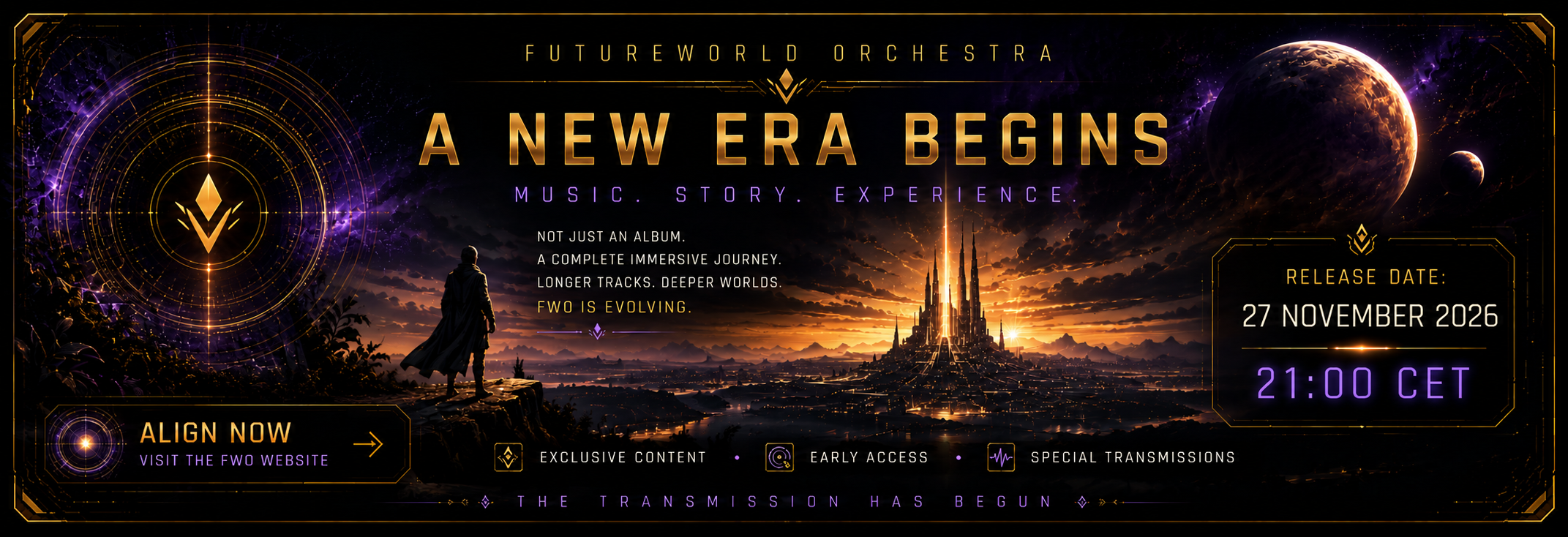
Why I Refused to Become an Algorithmic Content Machine
Modern digital culture increasingly pressures artists to optimise themselves for constant visibility. At some point, I realised I no longer wanted to create only for algorithms. I wanted to create worlds again.
The internet created extraordinary opportunities for artists.
Suddenly, anyone could share music, ideas, visuals and imagination with the entire world.
For independent creators, that possibility was revolutionary.
But over time, something else slowly emerged alongside that freedom.
A new kind of pressure.
The rise of algorithmic creativity
Digital platforms reward consistency, speed and constant engagement.
Post regularly. Remain visible. Keep feeding the system. Stay active or disappear.
Gradually, creativity risks becoming shaped less by imagination and more by optimisation.
The algorithm becomes the invisible audience always watching.
The emotional cost of constant output
Endless production eventually creates emotional fatigue.
Not because creativity disappears, but because constant visibility leaves little room for emotional depth to develop naturally.
Atmosphere needs silence sometimes. Imagination needs distance. Meaning often requires time.
Yet digital systems rarely reward slowness.
The difference between output and vision
There is a profound difference between endlessly producing material and building something meaningful over time.
Content fills feeds. Vision creates worlds.
A deeper creative identity cannot fully emerge through constant reaction alone.
It requires reflection. Obsession. Emotional continuity. Long-term imaginative focus.
Sometimes it even requires temporarily disappearing from the noise.
Why AI intensified this realisation
Artificial intelligence accelerated these questions even further.
Content can now be generated faster than ever before.
Images. Music. Text. Endless variations appearing instantly.
This made one thing increasingly clear to me:
If infinite content becomes possible, then personal atmosphere, imagination and emotional identity become even more important.
I wanted it to become an emotional universe people could inhabit.
The return to worldbuilding
This realisation gradually changed the direction of Futureworld Orchestra itself.
The project evolved beyond isolated releases and increasingly moved toward immersive worldbuilding.
The Intergalactic Night Train. Alignment. Signals. Atmosphere. Imagined systems and emotional transmissions.
These ideas emerged because I wanted to create something slower, deeper and emotionally coherent rather than endlessly reactive.
Something capable of carrying atmosphere across time.
Technology should support imagination
I am not against technology.
In many ways, modern tools are extraordinary and deeply inspiring.
AI can amplify imagination. The internet can connect creators globally. Digital systems can remove creative limitations previous generations never escaped.
But tools should remain tools.
The moment creativity becomes fully subordinate to algorithms, something essential begins to disappear.
The future beyond optimisation
Perhaps the future of creativity will slowly move back toward depth again.
Toward worlds instead of fragments. Toward atmosphere instead of constant stimulation. Toward emotional resonance instead of permanent visibility.
Because human beings do not only search for endless content.
They search for meaning.
Stay connected with Futureworld Orchestra and receive future transmissions, previews and special updates.
Align with FWO