
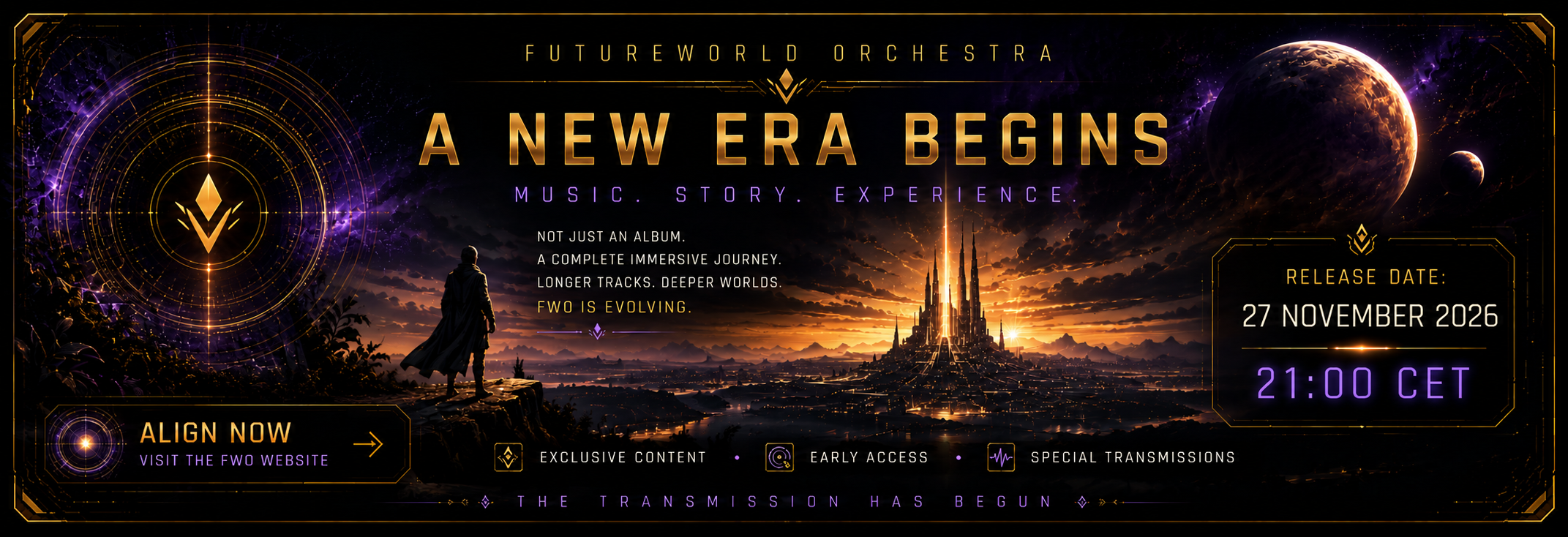
The Future Belongs to Artists Who Still Dare to Feel
In an age increasingly driven by algorithms, automation and endless digital noise, emotional honesty may become one of the rarest and most valuable creative forces left.
We are entering a world where almost everything can be generated instantly.
Music. Images. Videos. Entire virtual realities.
Technology continues to accelerate at astonishing speed, and artificial intelligence is reshaping the creative landscape faster than most people ever expected.
Yet despite all this technological power, one thing remains remarkably difficult to imitate:
The emotional core of art
The most powerful works of art have never merely been technically impressive.
They resonate because they contain something deeply human.
Vulnerability. Wonder. Longing. Hope. Fear. Obsession.
Great art often carries traces of a real person trying to understand themselves — and the world around them.
That emotional connection is what makes people return to certain songs, films, books and experiences throughout their lives.
The danger of emotional detachment
Modern technology offers extraordinary possibilities, but it also creates a temptation:
The temptation to create endlessly without truly feeling anything.
Content can now be produced faster than ever before. Entire systems reward speed, visibility and constant output.
But art created only to satisfy algorithms often loses its emotional centre.
It may attract attention briefly. Yet it rarely leaves a lasting emotional mark.
Why emotional courage matters
Truly emotional art requires courage.
It requires artists to expose uncertainty, vulnerability and personal truth in ways machines cannot genuinely experience.
In many ways, emotional honesty may become even more important in the AI era precisely because authentic humanity will stand out more clearly against synthetic perfection.
Audiences may increasingly search for creators who still feel real.
Artists who still dare to care deeply about what they make.
Technology should support emotion — not erase it
Artificial intelligence itself is not the enemy of creativity.
Used thoughtfully, AI can help artists visualise ideas, expand possibilities and remove technical limitations that once restricted imagination.
But technology should support emotional expression — not replace the human soul behind it.
Because audiences ultimately connect to meaning. To atmosphere. To emotional truth.
Not merely to flawless output.
How this connects to Futureworld Orchestra
Within Futureworld Orchestra, technology is part of the creative journey — but never the destination itself.
AI may help visualise worlds and accelerate experimentation, but the emotional direction remains deeply human.
The memories. The fascination with science fiction. The atmosphere behind the music. The emotional undercurrent hidden beneath the sound.
Those things cannot simply be automated into existence.
The human signal
Ironically, the more artificial the world becomes, the more valuable authentic humanity may become.
People may eventually grow tired of endless generated perfection and begin searching once again for something unmistakably real.
Something imperfect. Emotional. Human.
Stay connected with Futureworld Orchestra and receive future transmissions, previews and special updates.
Align with FWO