
The Difference Between Content and Worlds
Content is consumed quickly. Worlds are emotionally inhabited. In an increasingly fragmented digital culture, that difference matters more than ever.
Modern digital culture revolves around content.
Endless streams of images, videos, posts, clips and updates move constantly through screens at enormous speed.
Most of it disappears almost immediately.
Consumed. Forgotten. Replaced.
Yet certain creations continue living inside people long after the moment itself has passed.
Not because they function merely as content.
But because they become worlds.
Worlds fill imagination.
Content is designed for speed
Most modern content is designed for immediate visibility.
Quick reactions. Fast engagement. Instant consumption.
The goal is often efficiency: capturing attention for a brief moment before the next stream arrives.
There is nothing inherently wrong with this.
But speed rarely creates deep emotional attachment.
Worlds create emotional continuity
Worlds operate differently.
A world suggests hidden depth beyond what is immediately visible.
Histories. Symbols. Atmospheres. Emotional layers. Unseen structures existing beyond the surface itself.
A true world allows imagination to continue expanding even after the experience temporarily ends.
People emotionally return to it again and again.
Why humans naturally seek worlds
Human beings have always sought immersive symbolic spaces.
Myths. Ancient religions. Literature. Cinema. Music. Science fiction.
These forms created emotional realities larger than ordinary daily existence.
They allowed people to emotionally inhabit meaning rather than merely observe information.
Worldbuilding continues that ancient psychological impulse in modern form.
Why worlds matter again in the AI era
Artificial intelligence is making content generation easier and faster than ever before.
Images, music and text can now appear almost instantly.
As abundance increases, emotional coherence becomes more valuable.
People may increasingly search for experiences that feel meaningful, immersive and emotionally connected rather than endlessly fragmented.
Worlds provide that continuity.
Futureworld Orchestra and immersive creation
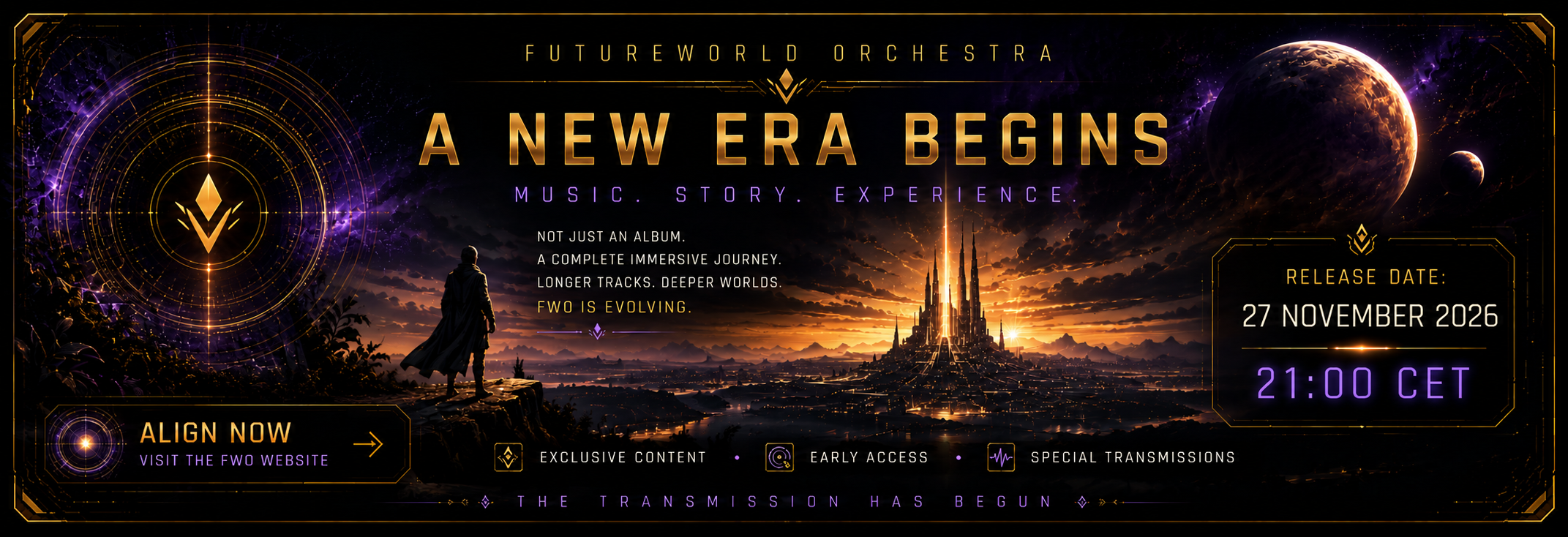
Futureworld Orchestra increasingly exists as more than a collection of songs.
The Intergalactic Night Train. Alignment. Imagined authorities. Cosmic systems. Emotional transmissions. Futuristic journeys shaped by memory and longing.
Together these elements create a larger emotional atmosphere people can continue exploring beyond individual tracks.
The music becomes part of a broader imaginative landscape.
A world rather than isolated content.
The future of artistic connection
The artists who remain meaningful in the future may increasingly be those capable of creating immersive emotional worlds rather than merely producing endless output.
Because people do not only search for stimulation.
They search for emotional belonging. Atmosphere. Meaning. Imagination.
They search for worlds capable of staying alive inside them.
Worlds continue echoing through memory and imagination.
Stay connected with Futureworld Orchestra and receive future transmissions, previews and special updates.
Align with FWO