
Why Human Creativity Still Matters in the Age of AI
In a world where machines can generate almost anything, the question is no longer whether technology can create. The real question is whether it can truly mean anything.
We are living through a strange and powerful moment. For the first time in history, almost anyone can create images, music, text, films, voices, designs and entire imaginary worlds with tools that would have seemed impossible only a few years ago.
Artificial intelligence has opened doors. It has removed technical barriers. It has placed extraordinary creative instruments into the hands of people who may never have had access to studios, orchestras, film crews or design teams.
That is not something to fear.
But it is something we must understand.
AI can generate. Humans give direction.
AI can produce impressive results. It can imitate styles, extend ideas, generate variations and help shape visions faster than ever before. But it does not wake up with a memory. It does not carry childhood dreams. It does not feel loss, wonder, longing, doubt, obsession or hope.
A machine can calculate patterns. A human being can turn experience into meaning.
The danger is not AI. The danger is emptiness.
The real danger of this new era is not that AI will create too much. The danger is that people may stop asking why they create at all.
If art becomes only content, if music becomes only output, if stories become only material to feed an algorithm, then something essential is lost. Not because machines have taken it from us, but because we have forgotten to protect it.
Human creativity still matters because it carries intention. It carries risk. It carries imperfection. It carries emotional truth.
Futureworld Orchestra and the human signal
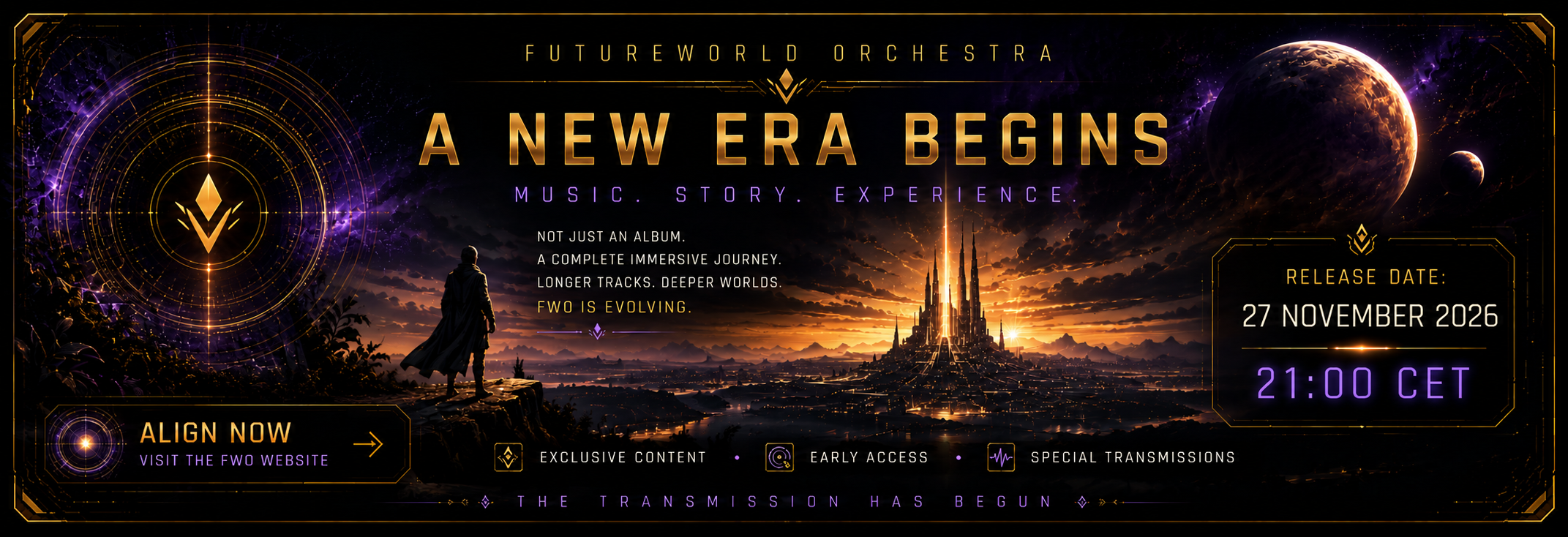
For me, Futureworld Orchestra has never been only about sound. It has always been about atmosphere, imagination, emotion and the strange feeling that music can open a doorway to somewhere else.
AI may help me visualise that world. It may help me build pages, images, cinematic fragments and immersive experiences around the music. But the source remains human.
The memories are human. The musical instincts are human. The choices are human. The emotional direction is human.
That is why I do not see AI as a replacement for creativity. I see it as a new instrument. Powerful, dangerous, inspiring — but still only an instrument.
The future belongs to those who still feel
In the age of AI, human creativity may become more important than ever. Not because humans can produce faster than machines, but because humans can care.
We can create from memory. From pain. From wonder. From love. From frustration. From dreams that have followed us for decades.
The future will not belong to those who merely generate the most. It will belong to those who create something people can believe in.
Human imagination remains the signal.
Technology is only the amplifier.
Stay connected with Futureworld Orchestra and receive future transmissions, previews and special updates.
Align with FWO