
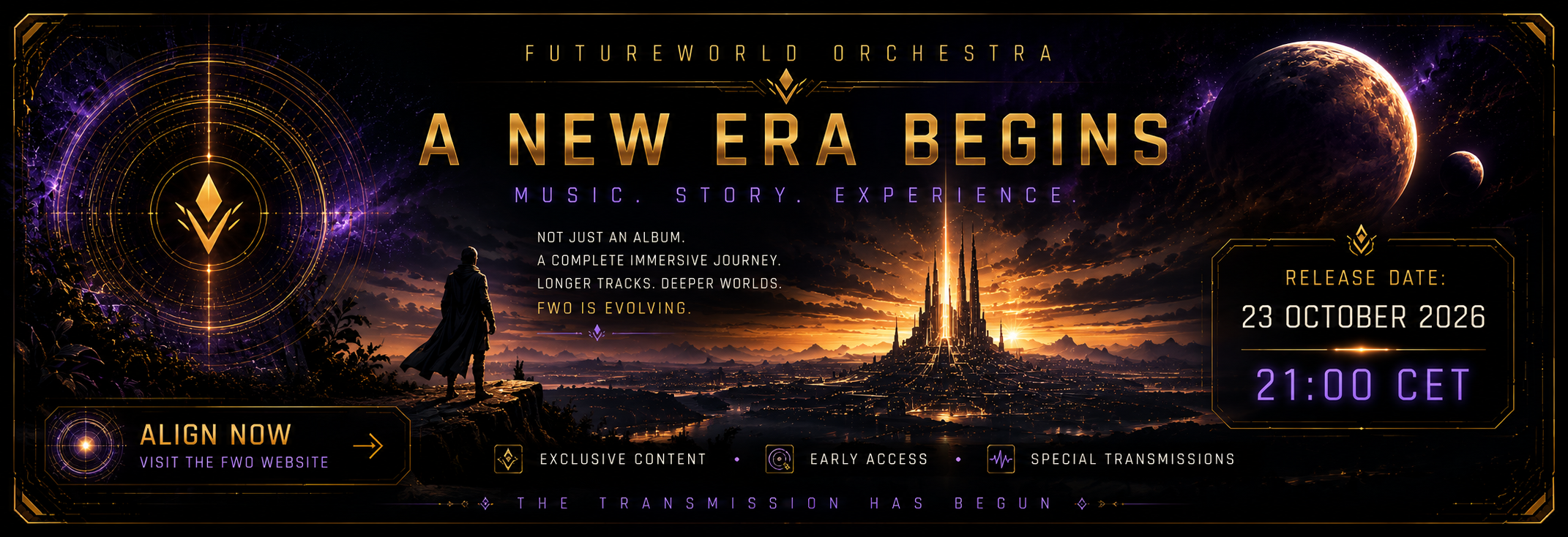
Why the Future of Art May Become More Personal
As technology makes creative production faster, easier and more abundant, the most meaningful art may increasingly be the work that feels unmistakably personal.
The future of art will not only be shaped by technology.
It will also be shaped by what people begin to miss when technology becomes everywhere.
As artificial intelligence, automation and digital systems generate endless streams of material, audiences may increasingly search for something harder to manufacture:
A sense of personal truth.
Abundance changes what people value
For much of history, creative production was limited by access.
Studios, equipment, training, distribution and institutional support all created barriers between imagination and audience.
Today, many of those barriers are disappearing.
This is extraordinary.
But when creative output becomes abundant, attention begins to move toward different qualities.
Not merely what looks impressive.
But what feels real.
Personal art carries fingerprints
Personal art carries traces of the person behind it.
Memories. Obsessions. Contradictions. Vulnerabilities. Emotional history.
These traces are not always obvious, but people can often sense them.
They create depth beyond technique.
They make a work feel less like a product and more like a transmission from another human being.
Why personal vision matters in the AI era
Artificial intelligence can imitate styles, generate variations and produce impressive results very quickly.
But style alone is not identity.
A recognisable artistic voice comes from repeated choices shaped by lived experience.
It comes from what an artist keeps returning to. What they cannot let go of. What they are still trying to understand.
That kind of personal gravity cannot simply be switched on by a machine.
The return of sincerity
In highly digital environments, sincerity can feel risky.
Irony, speed and performance often dominate online culture.
Yet sincere personal expression may become increasingly powerful precisely because it stands apart from calculated visibility.
People may grow tired of content that feels optimised but emotionally empty.
They may begin searching again for artists who create from genuine inner necessity.
Futureworld Orchestra as a personal universe
Futureworld Orchestra may appear surrounded by science fiction, cosmic systems, imagined authorities and futuristic worlds.
But beneath that exterior, the project remains deeply personal.
The fascination with space. The love of synthesizers and progressive music. The long creative journey. The memories, delays, rediscoveries and emotional turning points.
These elements give the universe its human core.
The futuristic language becomes meaningful because it carries something personal underneath.
The future may favour human identity
As creative tools become more powerful and widely available, artistic identity may become one of the most important distinguishing forces.
Not just technical ability.
Not just visual polish.
But personal vision. Emotional honesty. Atmosphere. Meaning.
The future of art may become more personal because people will increasingly need to feel the human being behind the work.
Stay connected with Futureworld Orchestra and receive future transmissions, previews and special updates.
Align with FWO