 Skip to content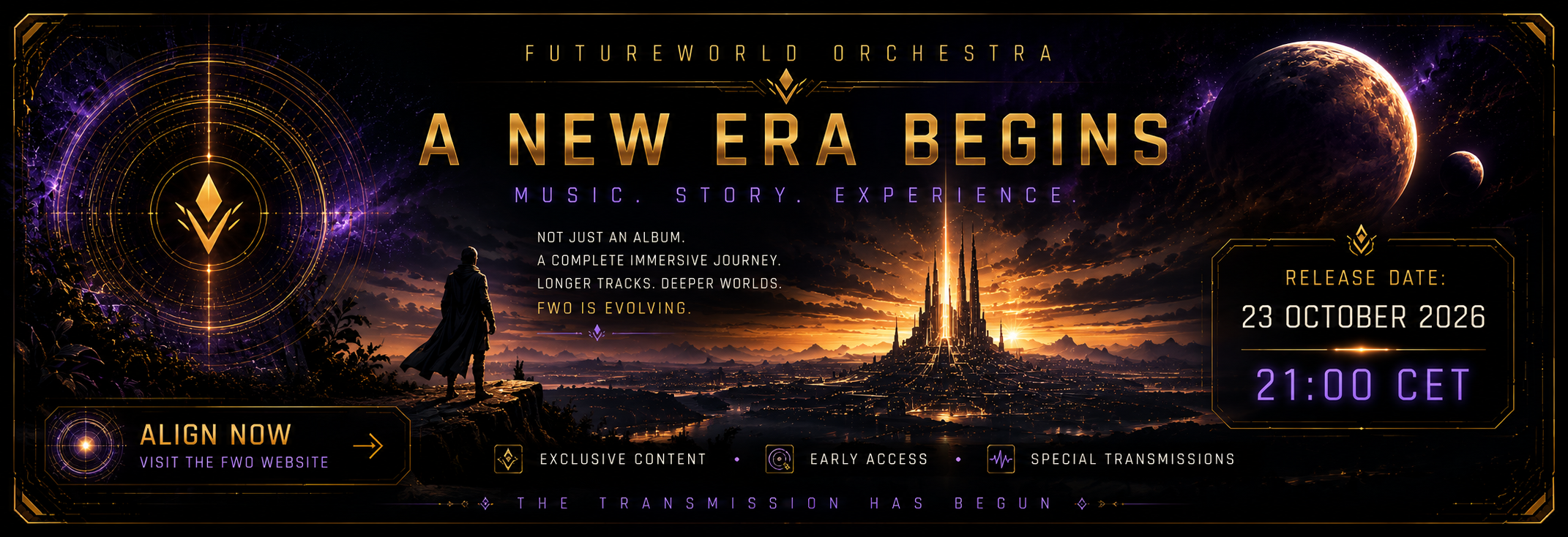
Why Worldbuilding Matters Again
In an age overwhelmed by endless content, people increasingly search for something deeper — immersive worlds that allow imagination, emotion and meaning to exist together again.
Modern culture moves incredibly fast.
Images appear and disappear within seconds. Songs are consumed instantly. Endless streams of content compete constantly for attention.
Yet despite this overwhelming abundance, many people still feel emotionally undernourished.
Because information alone rarely creates immersion.
They crave worlds they can emotionally enter.
Worldbuilding creates emotional space
Worldbuilding allows art to become larger than a single product or isolated experience.
It creates atmosphere, mythology, emotional continuity and a sense that something exists beyond the immediate surface.
A world suggests hidden histories. Invisible systems. Untold stories. Emotional depth extending beyond what is directly shown.
That sense of depth activates imagination.
Why immersive worlds matter psychologically
Human beings naturally seek meaning through stories and symbolic spaces.
Throughout history, myths, legends, religions, literature and cinema all created emotional frameworks that helped people emotionally interpret existence.
Worldbuilding continues this tradition in modern form.
It allows people to emotionally inhabit ideas rather than merely observe them intellectually.
That emotional immersion often creates far stronger memories than isolated content alone.
The return of atmosphere
In recent years, many people have quietly begun longing again for atmosphere, mystery and emotional immersion.
Not merely constant stimulation.
They search for experiences that feel meaningful rather than disposable.
Worldbuilding provides precisely that emotional continuity.
It transforms separate songs, visuals, stories and symbols into a larger emotional universe.
Why worldbuilding matters in the AI era
Artificial intelligence can increasingly generate enormous quantities of isolated content.
Images. Music. Video. Text.
But worldbuilding requires something more difficult:
Emotional coherence. Symbolic depth. Atmosphere. Long-term imaginative vision.
Great worlds are not merely assembled. They are emotionally cultivated over time.
Futureworld Orchestra and immersive creation
Futureworld Orchestra increasingly exists not only as music, but as an evolving imaginative universe.
The Intergalactic Night Train. The alignment concept. Cosmic systems. Imagined authorities. Emotional transmissions. Futuristic journeys shaped by memory and longing.
These elements work together to create an immersive emotional atmosphere larger than any single track alone.
The goal is not simply to release music.
The goal is to create an experience people can emotionally enter and continue exploring.
The future of artistic experience
As technology continues accelerating, immersive worldbuilding may become increasingly valuable.
Because people may increasingly search for emotional depth instead of endless fragmentation.
Not just isolated entertainment.
But meaningful imaginative spaces that allow reflection, wonder and emotional connection.
Stay connected with Futureworld Orchestra and receive future transmissions, previews and special updates.
Align with FWO