 Skip to content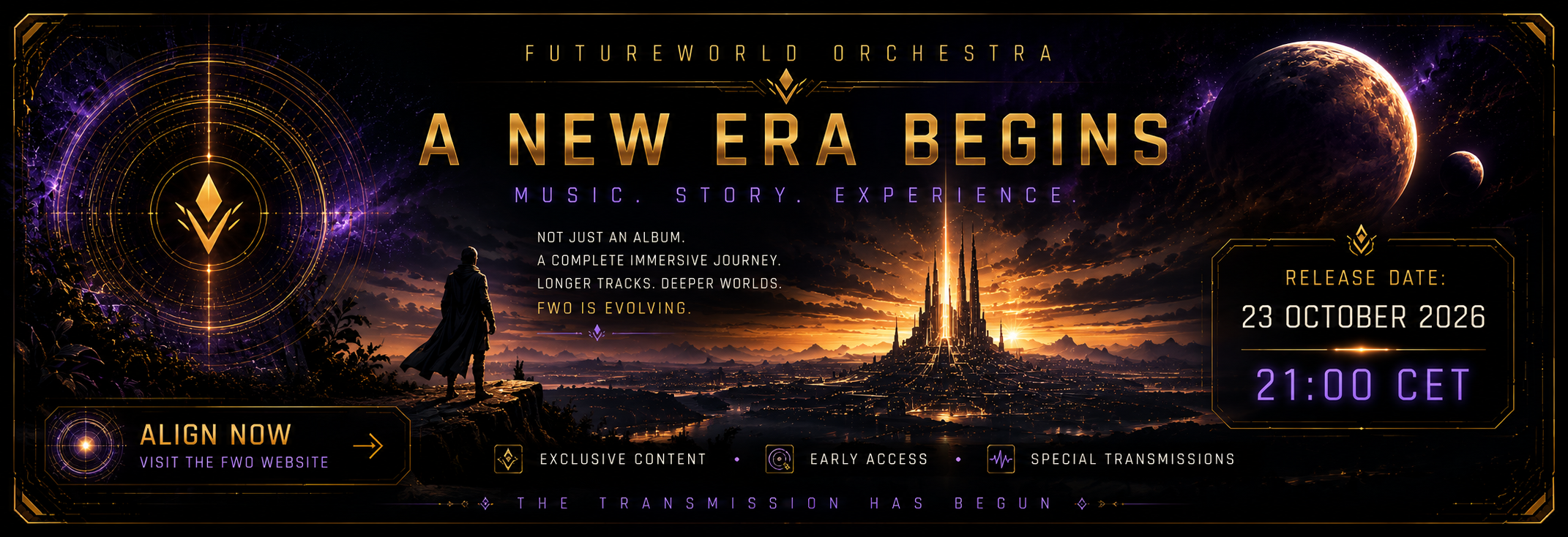
Science Fiction Was Never About Predicting the Future
The greatest science fiction does not merely forecast technology. It reveals what humanity fears, hopes for and dreams about when facing the unknown.
Science fiction is often misunderstood as a genre of prediction.
People look back at old films, books and music and ask whether they correctly imagined future technology.
Did they predict artificial intelligence? Space travel? Digital communication? Machines replacing human work?
But the deeper purpose of science fiction was never simply to guess what inventions would arrive.
The future as a mirror
Science fiction uses the future as a mirror.
Through distant planets, intelligent machines, cosmic journeys and impossible technologies, it reflects questions that already exist inside the present.
What are we becoming? What are we losing? What do we still hope to find?
The spaceships, robots and futuristic cities are often symbols for much older human concerns.
Technology is never the whole story
The most memorable science fiction rarely survives because of technical accuracy alone.
It survives because of atmosphere, emotion and philosophical depth.
A futuristic world becomes powerful when it allows us to feel something about being human.
Wonder. Isolation. Fear. Curiosity. Longing. Awe.
Without those emotions, even the most advanced fictional technology becomes empty decoration.
It asks what humans may become.
Why science fiction still matters in the age of AI
We now live in a time that increasingly resembles the imaginary futures of earlier generations.
Artificial intelligence, automation, digital worlds and synthetic media are no longer distant concepts.
They are part of everyday reality.
This makes science fiction more relevant, not less.
Because science fiction gives us a way to emotionally and philosophically process technological change.
Imagination as warning and possibility
Science fiction can warn us.
It can show futures where humanity loses itself through control, greed, automation or emotional emptiness.
But it can also inspire us.
It can imagine futures where humanity expands, explores, connects and becomes more aware of its place in the universe.
That tension between warning and wonder is what gives science fiction its lasting power.
Futureworld Orchestra and imagined worlds
Futureworld Orchestra exists within this tradition of emotional science fiction.
The cosmic imagery, futuristic atmosphere and imagined systems are not meant only as visual decoration.
They are symbolic spaces.
Places where human emotion can travel beyond ordinary reality.
The Intergalactic Night Train, the alignment concept and the wider Futureworld universe are not just futuristic ideas.
They are ways of exploring longing, transformation, memory and human imagination through a science-fiction lens.
The real future of science fiction
As technology continues to evolve, science fiction will not become obsolete.
It may become even more necessary.
Not because it tells us exactly what will happen, but because it helps us ask better questions before the future arrives.
The true power of science fiction is not prediction.
It is perspective.
Stay connected with Futureworld Orchestra and receive future transmissions, previews and special updates.
Align with FWO