
Robert Pot
Creativity remains.
Why I Thought You Might Find This Interesting
Over the years I have watched many of your interviews and discussions about music, creativity, technology and the changing landscape of our industry.
It occurred to me that my own journey may intersect with several of the themes you often explore.
Many musicians experience one or two major technological revolutions during their creative lives.
I have lived through several.
When Futureworld Orchestra was founded in 1980, home computers were still rare, MIDI had not yet entered the studio, digital recording was years away and the internet still sounded like science fiction.
Since then, I have witnessed the arrival of MIDI, digital synthesizers, computer-based recording, the internet, streaming platforms, social media and now artificial intelligence.
Each of these innovations changed how music is created, distributed and experienced.
Human imagination creates the meaning.
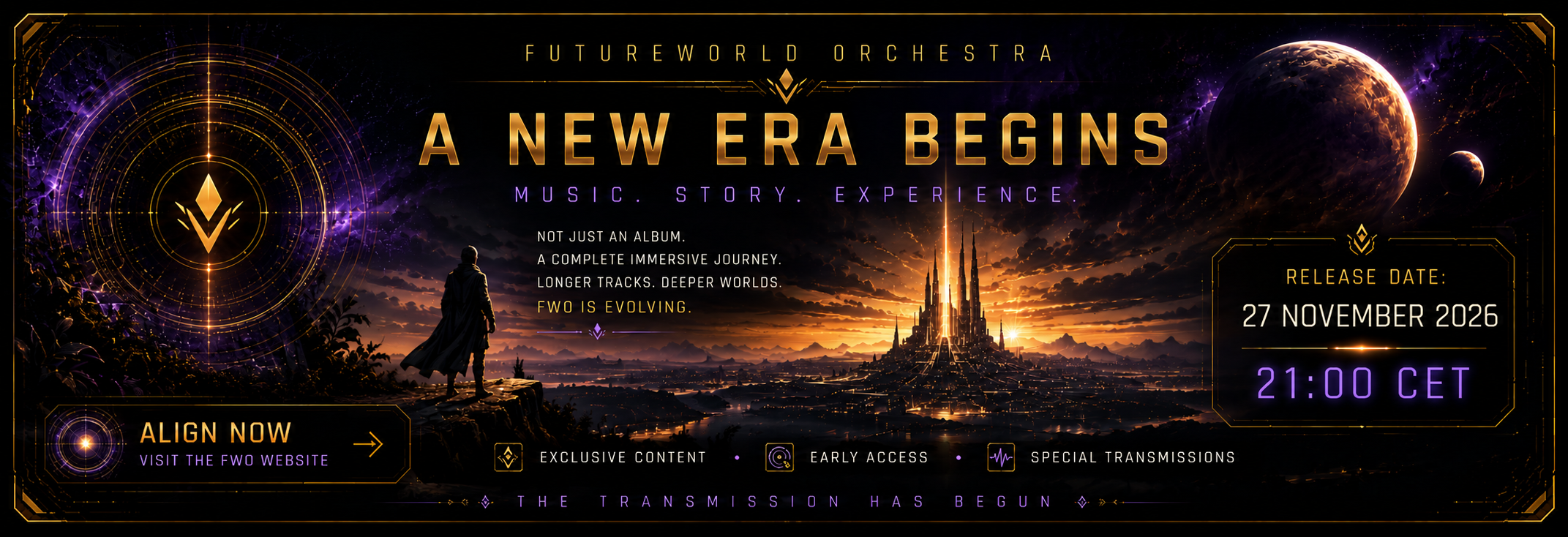
Today, at the age of sixty-nine, I am working on the most ambitious musical project of my life.
Not despite the arrival of AI — but during it.
I believe this journey may offer an unusual perspective on music, technology and creativity across nearly half a century of change.
During the lifetime of Futureworld Orchestra, the music industry has reinvented itself multiple times.
In 1980, music was still largely created using analogue instruments, tape machines and physical media. Releasing music required access to studios, manufacturing facilities and distribution networks that were often beyond the reach of independent artists.
Over the decades that followed, I witnessed the arrival of MIDI, digital synthesizers, computer-based recording, the internet, MP3 distribution, streaming platforms, social media and now artificial intelligence.
Each new technology promised to change everything.
Some did.
Yet throughout all those transformations, I continued asking the same question:
Technology made music easier to create, easier to distribute and easier to consume. But technology alone never explained why certain songs remain with us for decades while countless others disappear.
Looking back, I have come to believe that every technological revolution ultimately reveals the same truth:
The tools change. The platforms change. The business models change.
But imagination, emotion and storytelling remain at the heart of meaningful music.
Perhaps that is why, after more than four decades, I still feel the same excitement when beginning a new project as I did when Futureworld Orchestra first started in 1980.